Home · Sourcing
Bari · Sanaag · Sool
Where the resin comes from, and who it comes from.
The escarpment
The Cal Madow range runs east from the Golis along the Gulf of Aden, a wall of weathered limestone that catches what little moisture the monsoon carries inland. It is the only place on earth where Boswellia frereana grows. The trees hold to bare rock at 700 to 2,100 metres, unirrigated, many of them older than the states that have come and gone beneath them.
The range crosses three administrative regions. Boswellia frereana — our Maydi — comes off the Bari side; B. carterii — our Beeyo — off the Sanaag side of the same escarpment. When a sack label reads Cal Madow it names the range; when a product page reads Sanaag it names the region. They are the same ground described at two levels.
Below the frankincense line, in the hotter thorn scrub of Sool, Commiphora myrrha takes over. Two species, two altitudes, two different sets of hands — which is why we grade them separately and refuse to sell them on a single commodity scale.
The incision
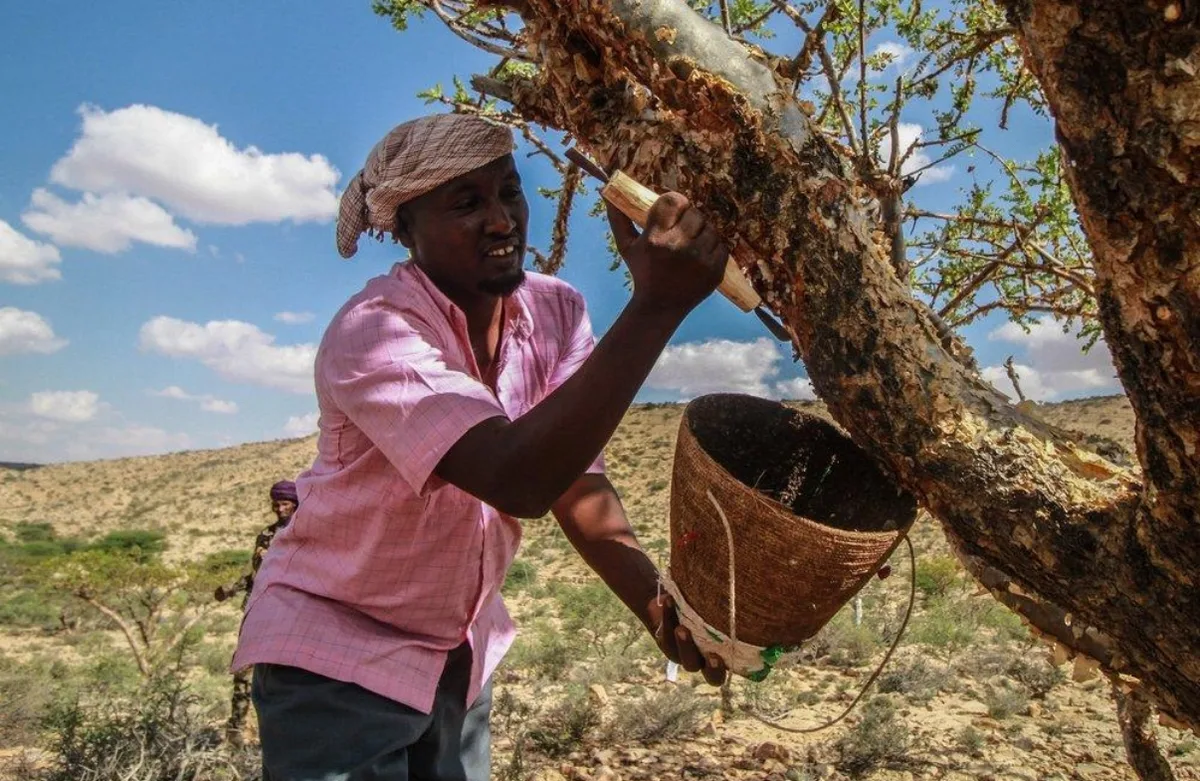
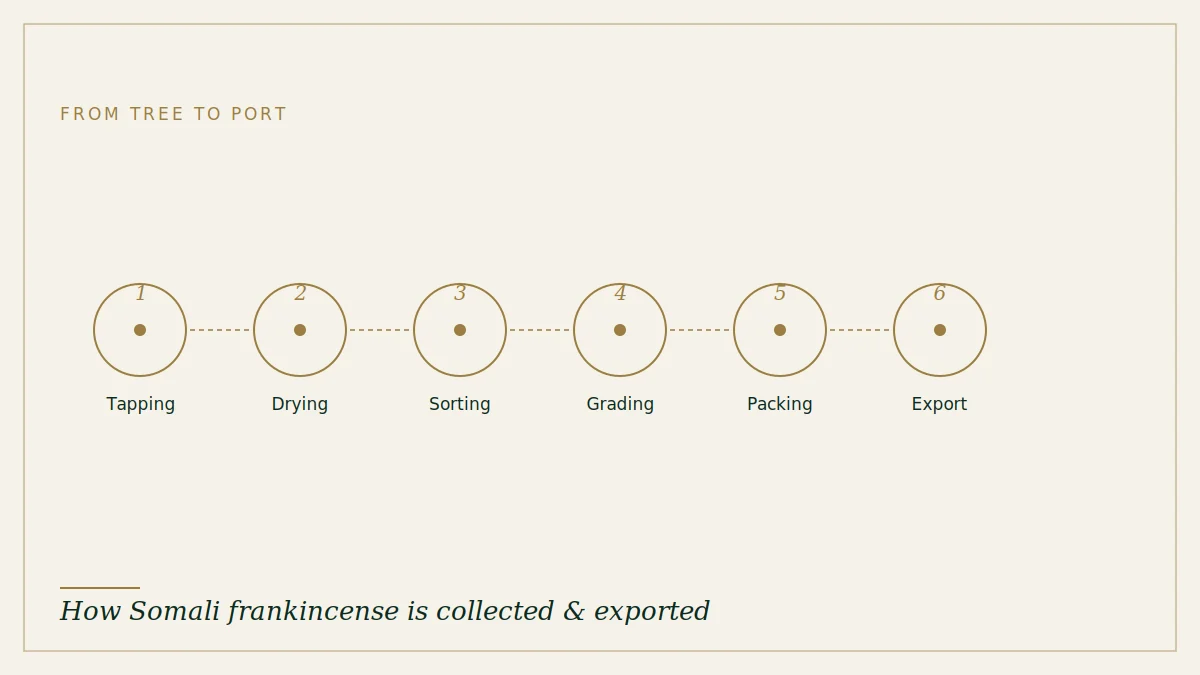
Tapping is done with the mingaaf, a short curved blade used here for as long as anyone has kept records. The cut is shallow: bark is lifted, never stripped, so the wound closes within the season. No tree in our collection areas is tapped more than twice a year, and stands are rested between seasons.
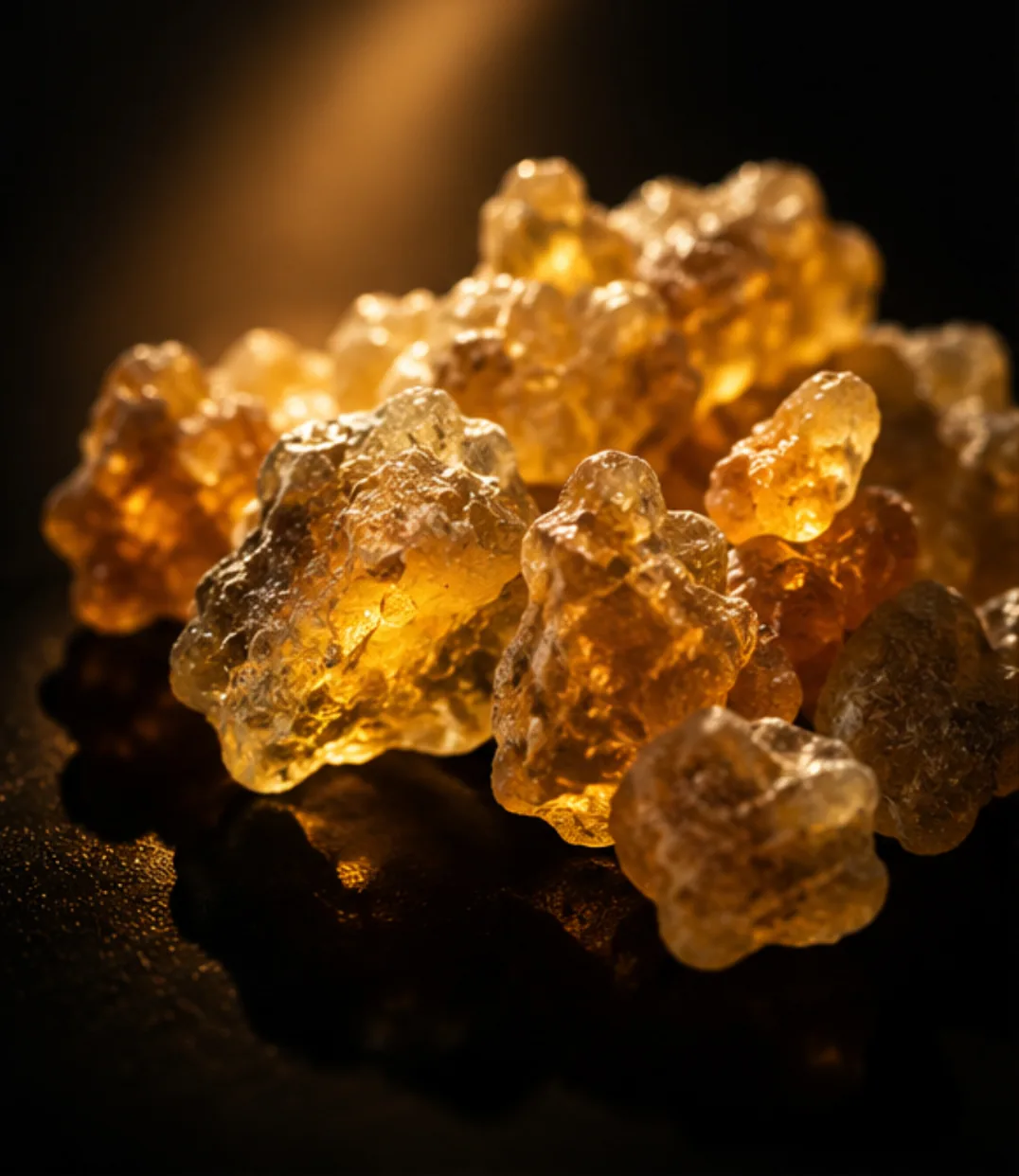
Sap exudes and hardens on the bark for two to three weeks. The finest tears cure on the tree rather than on the ground — cleaner, drier, and free of the grit that downgrades a lot before it ever reaches a sorting table. That is the material we buy, and we buy it before it is blended down.
Cleaning, sorting, packing
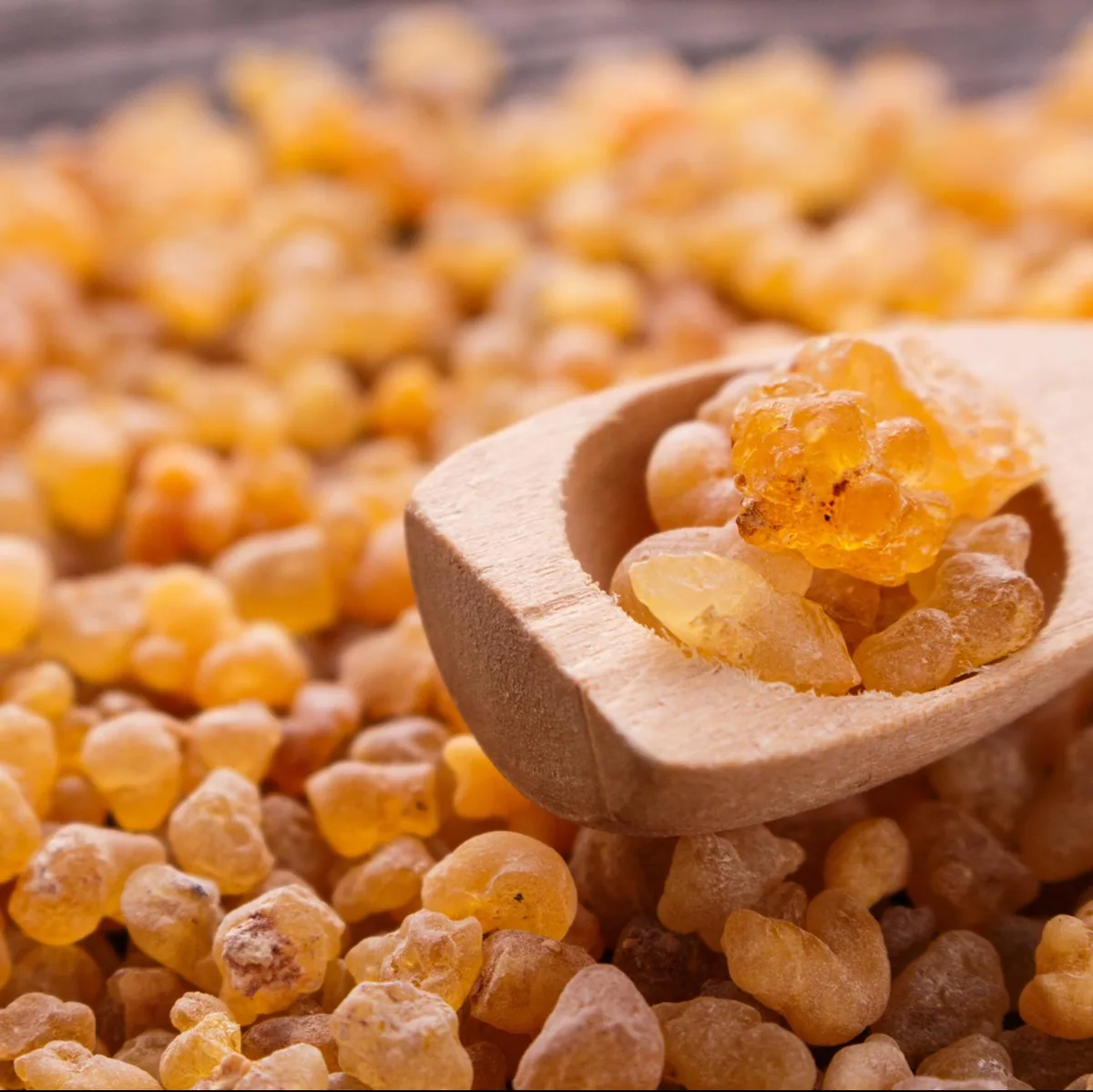
Lots come down to Bosaso from several collection areas. They are shade-dried for four to eight weeks until moisture falls below specification, then cleaned of bark and grit and hand-sorted by size, colour and clarity against the written standard for that species.
Siftings are separated out and sold as siftings. They are never blended back into a higher grade — the single most common way a resin lot is quietly degraded between origin and Europe.
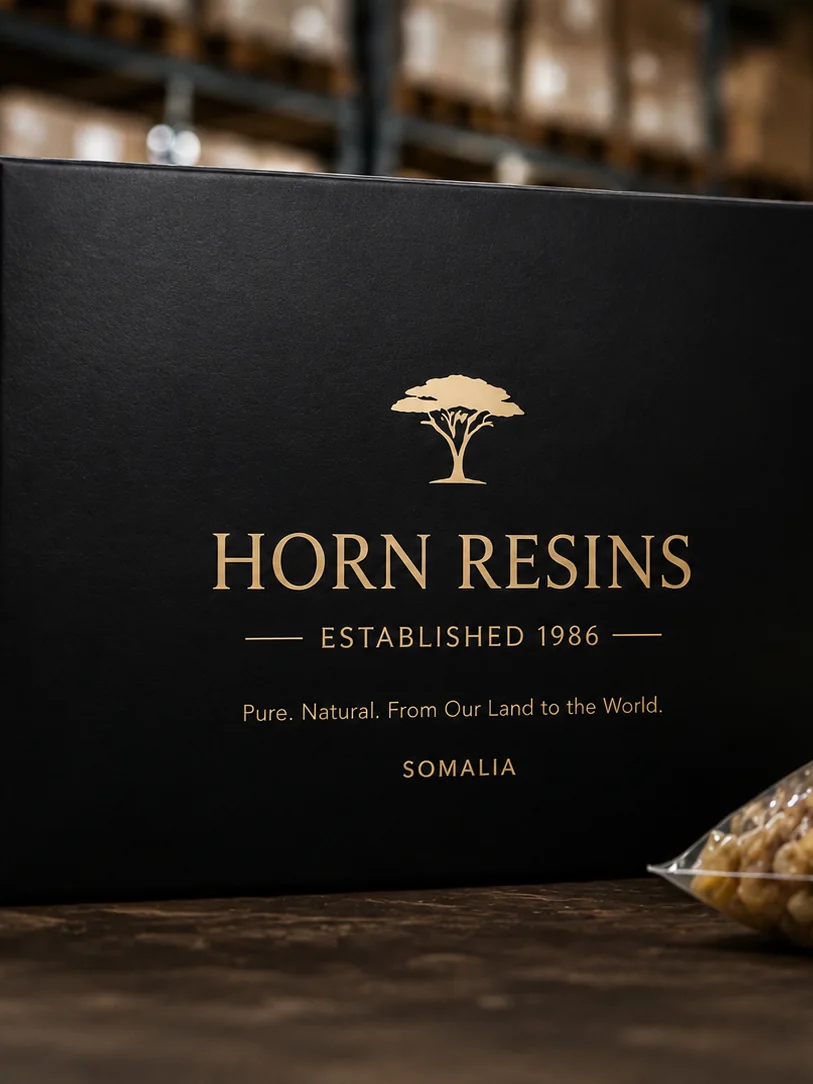
Packing is food-grade PE liner inside woven PP or jute, heat-sealed, lot-labelled with species, grade, net weight, harvest window and traceability code, then palletised for the container.
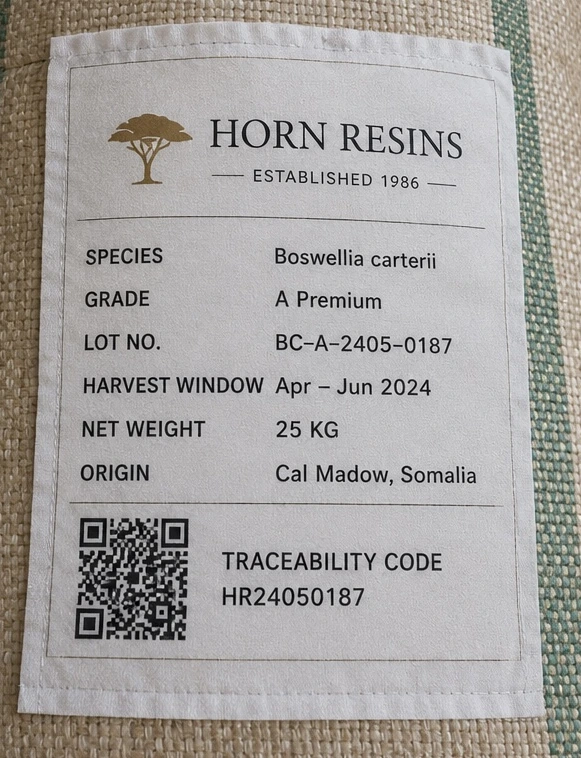
Lot BC-A-2405-0187
Every sack carries its own paperwork
Traceability is not a promise on a website — it is a label a warehouse operative can read and a buyer can photograph on arrival. Species, grade, lot number, harvest window, net weight and origin are printed on every sack before it leaves Bosaso, alongside a code that resolves to the same lot dossier we hold.
Cal Madow is the limestone mountain range that runs along the northern coast; Sanaag and Bari are the administrative regions it crosses. This carterii lot was collected on the Sanaag side of that range, which is why the label reads Cal Madow and the product page reads Cal Madow range, Sanaag. They describe the same place at two levels of precision.
Field values photographed from a shipped lot. The same reference appears on the commercial invoice, the packing list and the certificate of origin.
One number, five records
Traceability is not a claim on a website; it is a filing convention. A single lot number is assigned at intake and is the only thing that connects the collection area, the grading record, the photographs and the shipping documents. If any one of them cannot be produced, the lot does not ship.
Named area, GPS-referenced, with the harvesting team recorded.
Species and tapping window fixed at intake — never merged later.
Sorter, date, grade and non-resin content on the lot sheet.
Six frames under standard lighting, filed against the lot.
The same number appears on invoice, packing list and certificate of origin.
Scroll sideways to follow the chain
The people who cut the trees
More than 120 harvesting families work under direct seasonal contract rather than through intermediaries, which is what makes the collection area on the lot sheet a real place rather than a guess.
Shallow tapping with the traditional blade, a maximum of two tappings a year, and rested stands between seasons. Tapping practice is managed by our own teams, not delegated.
No third-party certification is represented here beyond what is specifically identified in the relevant lot dossier and confirmed during quotation.
Ask us where a lot came from.
Give us a lot number and we will show you the collection area, the harvest window, the grading record and the photographs.