Home · Quality & documentation
Control
Every claim on this website is a number on a sheet of paper.
Grade, moisture, purity, origin and analysis are recorded per lot — and the lot number follows the resin from the sorting table to the bill of lading.
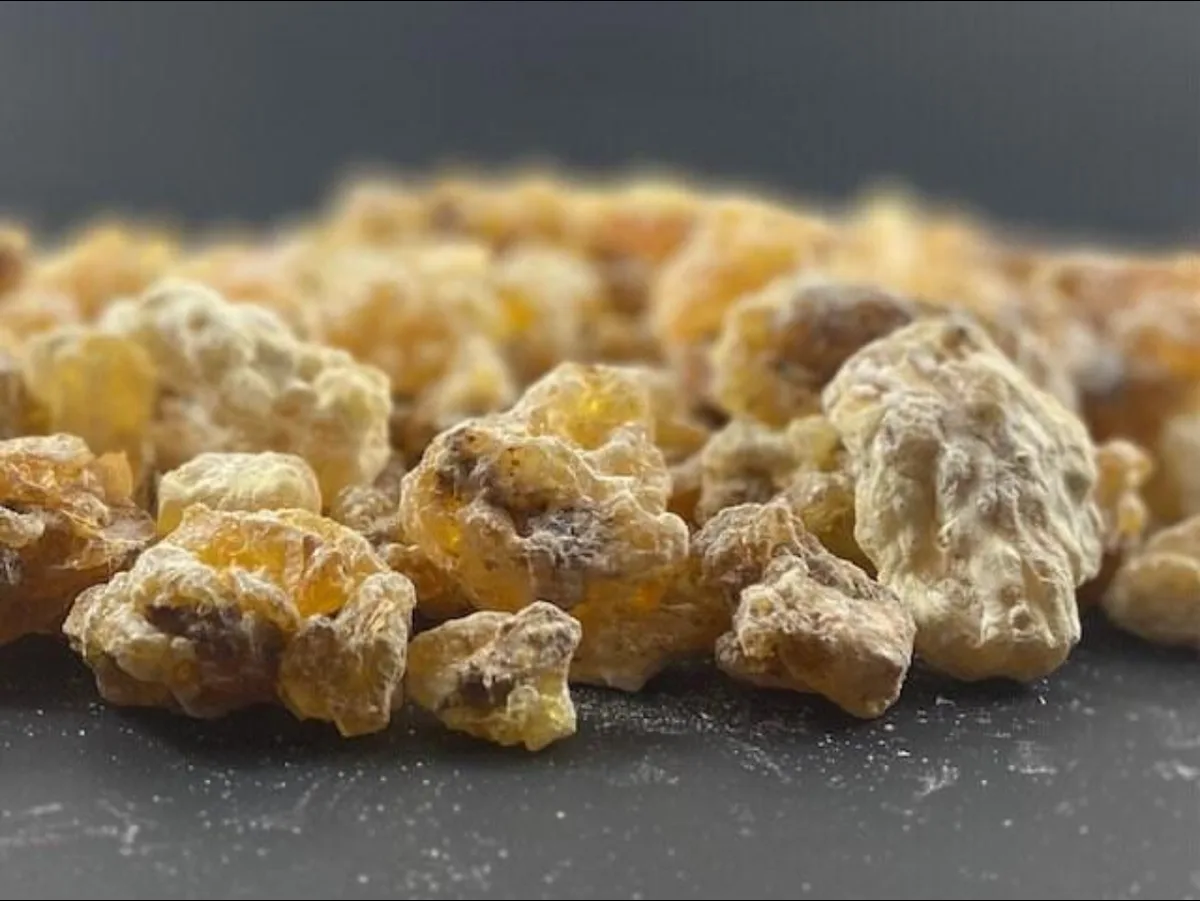
The control sequence
Six checks between the sack and the pallet
Lot arrives from a named collection area with harvest window and species recorded.
Bark, grit and non-resin material removed; siftings separated, not blended back.
Hand-sorted by size, colour and clarity against the written species standard.
Measured per lot and recorded on the specification sheet before packing.
Every lot photographed under the same lighting — this is what you approve.
GC/MS, microbiology, heavy metals and pesticide screening where the contract calls for it.
What is actually measured
Instruments, not adjectives
Test availability depends on the product, the lot, the destination and the agreed contract specification. Nothing on this page is represented as third-party certification unless it is named in the lot dossier.
Appearance, tear or lump size range, colour class and visible non-resin content, judged against retained reference samples for each grade.
Measured at intake and again before packing. Frankincense is specified at ≤ 8 %, myrrh at ≤ 10 %.
GC/MS volatile profile, microbiological counts, heavy metals and pesticide residues, arranged through our EU partner laboratory.
Commercial invoice, packing list, bill of lading, phytosanitary certificate, certificate of origin and lot dossier — issued ahead of arrival.
One lot number links collection area, harvest window, grading record, photographs and shipping documents.
A sealed counter-sample of every commercial lot is retained so a claim can be settled against material, not memory.
The document
What a lot dossier looks like
Each commercial lot is issued with a dossier that a quality manager can file and a customs broker can use. It is deliberately dull: the same fields, in the same order, every time.
Where a contract requires analysis beyond appearance and moisture, the laboratory report is appended to the same dossier under the same lot number.
Request a specimen dossierHR-26-MYD-0142
- Species
- Boswellia frereana
- Commercial name
- Maydi
- Grade
- Mushaad (A)
- Collection area
- Bari — Cal Madow escarpment
- Harvest window
- Second tapping
- Net weight
- 1,000 kg — 40 × 25 kg
- Appearance
- Pale ivory to golden, 10–50 mm
- Moisture
- 6.4 %
- Foreign matter
- 0.3 %
- Photographs
- 6 frames, standard lighting
- Counter-sample
- Sealed, retained 24 months
- Documents
- Invoice · packing list · B/L · phyto · CoO
Third-party
Certifications & membership
Halal certification covers handling and processing for the covered products and activities.
IFEAT membership is held by the supply operation, connecting it to the international aroma-trade industry.
Certificate scope and copies are confirmed per product, origin and destination during quotation. See certifications & compliance for the full statement.
Buyer questions
Before you write the specification
Can I approve material before it ships?
Yes — that is the normal sequence. We photograph the lot, send a pre-shipment sample, and load only against your written approval. The retained counter-sample is sealed at the same time.
Do you supply GC/MS results?
Where the contract calls for it. Analysis is arranged through our EU partner laboratory and appended to the lot dossier under the same lot number.
What do the A / B / C grades mean?
They are commercial shorthand only. Ordering is against the species-specific names — Mushaad, Mujarwal, Siftings for Maydi; Select, First, Distillation for Beeyo; Select, First, Industrial for myrrh.
Which documents come with a shipment?
Commercial invoice, packing list, bill of lading, phytosanitary certificate, certificate of origin and the lot dossier. Fumigation certificate where the destination market requires it.
How is the material packed?
Food-grade PE liner inside woven PP or jute, heat-sealed where applicable, lot-labelled with species, grade, net weight, harvest window and traceability code, then palletised.
Send us your specification.
If you already have a written spec, send it as it is. We will tell you plainly which grade meets it and which does not.